Ambulance Fleet Management Software
Transforming Ambulance Fleet Management with FleetWave
Watch product demoReliability is the non-negotiable baseline for any ambulance service. When a call comes in, the expectation is that a vehicle is not only available, but fully equipped and mechanically sound.
However, as providers face record-breaking utilisation rates and increasingly dispersed operations, maintaining this standard has become an immense logistical challenge. That’s where our Fleet Solutions steps in, having seen firsthand how data-driven fleet management can turn the tide.
In the UK, leading bodies like the West Midlands Ambulance Service and the Welsh Ambulance Services NHS Trust have already set the gold standard by rejecting outdated, paper-based tracking. By bringing their high-utilisation fleets under one streamlined digital roof with FleetWave, these services ensure their units stay exactly where they’re needed most: on the road, saving lives.
Challenges of ambulance fleet management
Unlike standard commercial fleets, NHS ambulance trusts and private services face a unique set of pressures that make manual ambulance fleet tracking nearly impossible to sustain.
1. Scheduling preventative maintenance
Ambulances are always on the move. High-utilisation rates mean vehicles are often running 24/7, leading to accelerated wear and tear. The biggest challenge is scheduling preventative maintenance without compromising emergency coverage. Every hour an ambulance spends in the workshop means it isn’t available for a 999 call; therefore, uptime maximisation – keeping vehicles road-ready as much as possible, is the most critical performance metric in this sector.
2. Maintaining specialised equipment
The vehicle chassis is only one aspect of an ambulance fleet’s complexity. Each unit functions as a cutting-edge clinical workspace that combines advanced life-support systems with automotive engineering. This places a dual maintenance burden on fleet managers: in addition to keeping track of brake wear and oil changes, they also have to manage a rotating inventory of medical devices, each of which has its own regulatory clock and calibration requirements.
3. Navigating compliance requirements
With its own service schedule, calibration cycle, and compliance record, every ambulance unit is a mobile clinical setting that houses a sophisticated network of life-saving technology.
Managing these specialised assets requires precise tracking of:
- Critical medical equipment: Defibrillators, ventilators, and infusion pumps must meet exacting clinical standards. A single day past a service deadline can ground a vehicle or create significant liability.
- Specialised conversions: The patient compartment includes high-wear components like hydraulic stretcher lifts, integrated oxygen systems, and climate-controlled medication storage.
- Onboard technology: A functional digital backbone, including Mobile Data Terminals (MDTs), GPS tracking, and emergency lighting, is essential for crew safety and navigational accuracy.
4. Eliminating operational bottlenecks
While smaller operations may still rely on paper logbooks or whiteboards, larger ambulance services face a different bottleneck: multiple digital systems that don’t communicate. Vehicle records, maintenance schedules, fuel data, telematics, and equipment inventories are often scattered across separate tools.
The result is similar to fragmented manual systems — information silos, delayed decisions, and an increased risk of errors. Staff spend time reconciling data instead of acting on it, meaning critical insights about fleet availability, maintenance needs, or operational efficiency can be missed.
5. Managing resources across regional operators
Fleet assets are frequently distributed among several stations and standby points for large regional providers. When data is dispersed, cost management, including fuel expenditure, parts inventory, and technician labour, becomes exponentially more difficult. Managers need the ability to see the big picture to optimise resource allocation and justify business cases for fleet renewals.
What does modern ambulance & EMS fleet management look like?
For today’s ambulance fleet managers, embracing modernity means moving away from the chaos of reactive repairs and toward a streamlined, preventative infrastructure.
We have spent over three decades defining this standard. By dismantling fragmented systems, a truly forward-thinking operation delivers:
Centralised visibility and real-time data
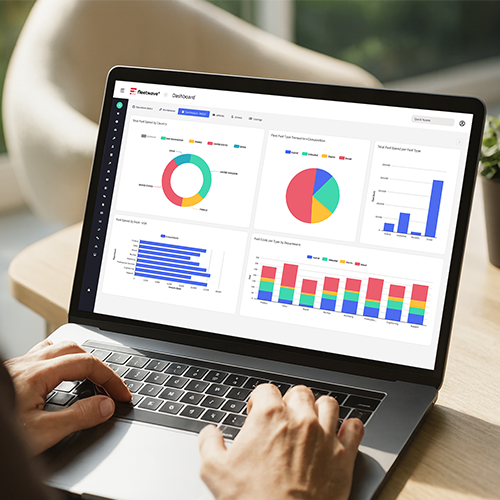
At the heart of a modern operation is a single, unified view. Managing personnel, medical equipment, and vehicles in isolated silos creates high-risk blind spots. Best-in-class providers bring the entire operation under one digital roof. This ensures instant access to accurate data (from fuel consumption and engine diagnostics to oxygen sensor calibrations and driver certifications), enabling rapid, well-informed decision-making.
Integrated maintenance and compliance
Modern management replaces disconnected spreadsheets with automated, joined-up workflows. When maintenance is linked directly to compliance, a vehicle’s service history, MOT/DVLA inspections, and equipment certifications are updated simultaneously. This integration ensures that no vehicle goes out on a shift without meeting strict safety and legal standards, drastically reducing the risk of audit failures or regulatory liability.
Mobile-enabled efficiency
The modern workshop is entirely paperless. By utilising mobile-enabled workflows, drivers can complete daily walk-around checks on tablets, instantly flagging defects to the workshop team. Technicians can then pull up work orders, check parts availability, and update vehicle status codes right from the bay, ensuring instant communication and maximum hands-on time. This connectivity bridges the gap between crews, workshops, and parts stores, slashing turnaround times for critical repairs.
Scalable, regional support
Finally, a truly modern system must be built to scale. Whether managing a single urban hub or a sprawling regional trust, the software must seamlessly handle the complexities of dispersed operations. This scalability ensures that as a service expands, the administrative burden does not, allowing providers to maintain the highest standards of patient care across every postcode they serve.
How FleetWave supports ambulance & EMS Fleets
Where vehicle availability is the ultimate measure of success, Chevin brings over 30 years of specialist expertise to FleetWave, our centralised platform purpose-built to streamline emergency operations. It replaces manual guesswork with automated precision, ensuring that every blue-light vehicle and piece of life-saving equipment is completely response-ready. Engineered for high-pressure, complex environments, the platform delivers the robust stability required to manage mission-critical assets at scale.
Improving vehicle availability
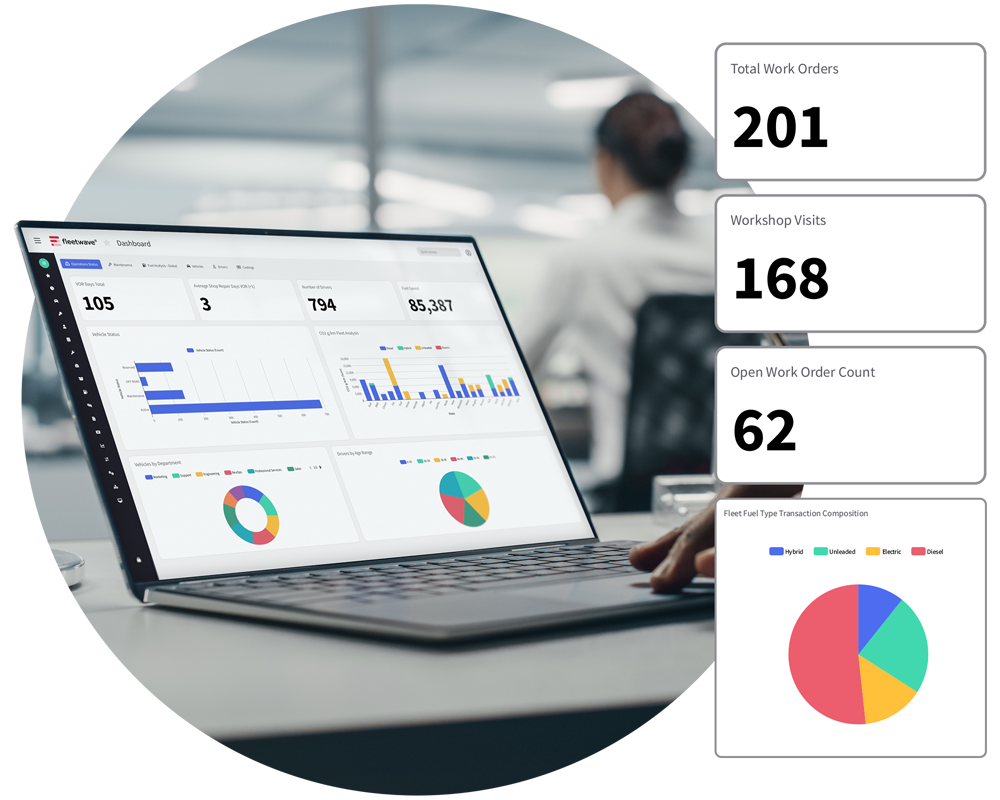
Keeping vehicles on the road requires a proactive, data-led approach. FleetWave automates routine service schedules by tracking real-time mileage and engine hours, triggering alerts well before potential mechanical failures occur. For operational teams, the platform offers instant clarity via colour-coded dashboards, making it easy to see at a glance which units are ready for deployment and which are booked into the workshop.
Strengthening compliance and governance
Upholding rigorous safety standards demands flawless record-keeping that stands up to strict regulatory scrutiny. FleetWave creates an unalterable digital audit trail for every inspection and repair, ensuring all safety checks and equipment calibrations are timestamped and logged. Because the software is highly configurable, trusts can standardise safety protocols across multiple regional hubs without disrupting the proven workflows crews rely on to stay compliant.
Reducing administrative burden
Manual paperwork acts as a drag on fast-moving operations. FleetWave eliminates the admin burden by automating reminders and workflows for everything from MOT deadlines to specialist medical equipment recertifications. By integrating directly with fuel cards and telematics systems, it cuts out manual data entry and removes costly errors. Leadership teams can instantly access precise fleet intelligence, such as total cost of ownership (TCO) and asset lifecycle data, without ever having to dig through a filing cabinet.
Key benefits of FleetWave
The ultimate goal of modern ambulance fleet management is simple: keeping vehicles and clinical equipment completely response-ready while controlling operational costs. FleetWave achieves this balance by delivering a clear, scannable suite of high-impact operational benefits:
- Maximised vehicle availability: Total, real-time visibility across the entire fleet ensures that control rooms and workshop managers know exactly which units are shout-ready, optimising frontline coverage when every second counts
- Reduced workshop downtime: By moving away from reactive breakdowns and towards a proactive, data-led maintenance schedule, teams can catch minor mechanical issues before they turn into costly, service-interrupting faults.
- Impeccable compliance and audit readiness: Build an unalterable digital paper trail. Every medical device calibration and vehicle safety check is timestamped and securely archived, making external inspections and regulatory audits entirely stress-free.
- Streamlined administrative overhead: Automated workflows and mobile-first integrations eliminate the need for manual data entry and tedious paperwork, freeing your team to focus on strategic fleet management rather than administrative tasks.
- Total cost transparency and control: Instantly track the TCO for every single asset. Pinpoint high-cost vehicles and operational inefficiencies across your regional hubs with just a few clicks.
- Built for public sector scaling: Designed to adapt alongside your organisation, FleetWave effortlessly handles the complex demands of sprawling regional ambulance trusts and multi-depot emergency services without creating extra administrative friction.
The trusted choice of ambulance service fleets
Our software supports emergency service organisations in managing vehicles, assets, and data with confidence.


Case studies
What our customers say
These real-world outcomes from our emergency service partners showcase the platform’s capacity to thrive in high-pressure, mission-critical environments. Managing over 1,200 vehicles and 7,000 medical assets, the West Midlands Ambulance Service replaced fragmented spreadsheets with a single, centralised platform. The FleetWave Technician App was a key addition, digitising the workshop and providing real-time visibility into asset compliance and readiness. By automating cost-centre coding and invoicing, the Welsh Ambulance Service reduced administrative overhead by 60%. They also used FleetWave’s data to move to a 99% paper-free operation and optimised their maintenance schedules based on vehicle idling hours rather than just mileage.
West Midlands Ambulance Service Transform Fleet Management with FleetWave
Discover how West Midlands Ambulance Service uses FleetWave to optimise fleet and asset management, enhancing efficiency and compliance.
Read more

The Welsh Ambulance Service saved 60% on administration costs using FleetWave
We have been working with the Welsh Ambulance Services NHS Trust since 2016 when they first implemented FleetWave to manage their external workshops and supplies.
Read more
Ready to improve your fleet?
If you’re ready to learn more about smarter fleet management, let us know and one of our Sales Development Representatives will be in touch!
See pricingResources
You may also be interested in…

Learning Zone
A buyer’s guide to fleet management software
Download A Buyers Guide to Fleet Management Software
Read more

Learning Zone
5 Proven Preventative Maintenance Best Practices to Keep your Fleet Moving
The importance of preventative maintenance to keep your fleet vehicles operational.
Read more

News
Shropshire Fire and Rescue Service go live with FleetWave
Shropshire Fire and Rescue Service recently went live with FleetWave to manage over 850 vehicles and associated assets!
Read more